

Laser Welding
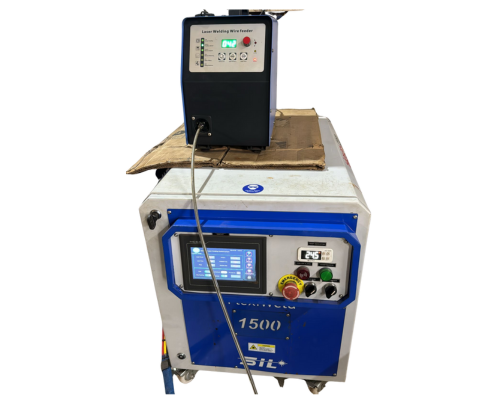
Laser welding works by focusing a concentrated beam of laser light onto the materials to be joined. This light generates intense heat, which melts the material at the weld joint. Once the laser is removed, the molten material cools and solidifies, forming a strong, permanent bond. The process can be performed in two main modes: continuous wave (CW) or pulsed. In continuous wave mode, the laser emits a constant stream of light, ideal for deep penetration welding. Pulsed mode, on the other hand, delivers the laser in short bursts, which is useful for welding delicate or thin materials where precise control over the heat input is required.
One of the most significant advantages of laser welding is its precision. The focused laser beam can be as small as a few micrometers in diameter, allowing for extremely accurate welds with minimal thermal distortion. This is particularly beneficial when working with thin materials or components that require a high degree of accuracy, such as in the aerospace and medical device industries. Another major advantage is the speed of the process. Laser welding can be performed at very high speeds, making it an ideal choice for mass production environments. The rapid heating and cooling cycles also mean that the heat-affected zone (HAZ) is much smaller compared to traditional welding methods, resulting in less damage to the surrounding material. Laser welding is also highly versatile. It can be used to weld a wide range of materials, including metals, plastics, and even dissimilar materials. This makes it a popular choice in industries where different materials need to be joined together, such as in the automotive sector, where steel and aluminum components are often combined. Additionally, laser welding can be performed in various environments, including vacuum or controlled atmospheres, further expanding its range of applications.
Despite its many advantages, laser welding does have some challenges. The initial cost of laser welding equipment can be high, and the process requires skilled operators to achieve optimal results. However, as technology continues to advance, these barriers are gradually being reduced, making laser welding more accessible to a wider range of industries. Looking forward, the future of laser welding is bright. Ongoing developments in laser technology are likely to further enhance the precision, speed, and versatility of the process, opening up new possibilities for its application. As industries continue to demand higher-quality products with faster production times, laser welding is set to play an increasingly important role in modern manufacturing.